

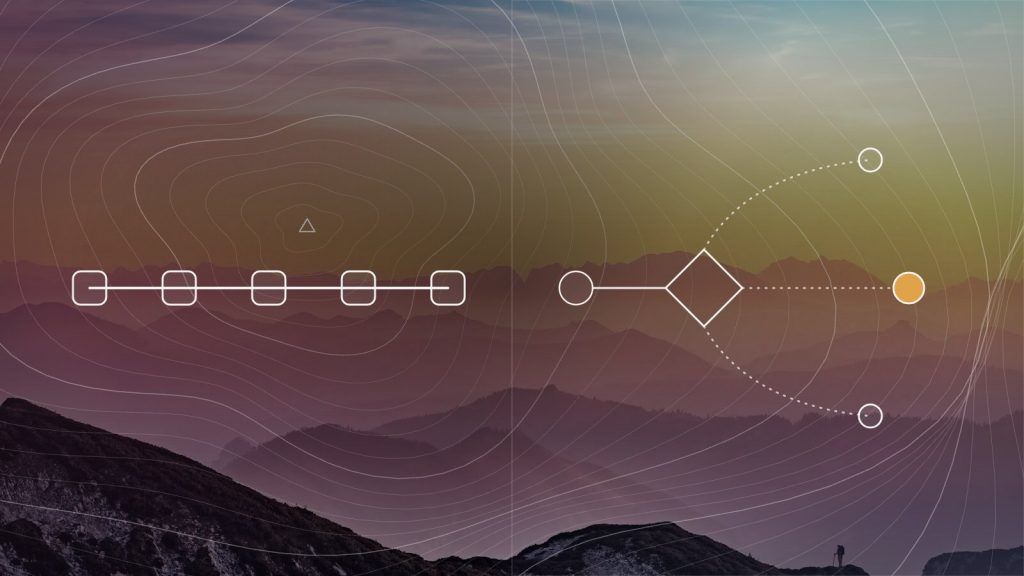
Two different things.
Anthropic, which makes Claude, draws a clear line in its guide to building agents. Workflows are systems where a model and tools follow code paths written in advance. Agents are systems where the model directs its own process and tool use, deciding how to get the task done.
Workflow
Known steps. Read the new products, draft descriptions, send them for review. The order never changes.
Agent
Chosen steps. Given a goal and tools, the model decides what to read and do next, and when it is finished.
Both
Same building blocks. A model, tools it can call, your data and rules, and a person who checks the result.
Start with the simplest thing that works.
The same guide recommends finding the simplest solution possible and adding complexity only when it is needed. Agents trade cost and predictability for flexibility, so they earn their place only when the task genuinely varies from case to case.
- If you can write the steps down in advance, it is a workflow
- If each case needs judgement about what to look at next, it may be an agent
- If a mistake would reach a customer, either way needs a person to approve it
Examples from marketing work.
Most repeat marketing tasks are workflows in disguise. A few are not.
- Workflow: drafting product descriptions for every new item, then sending them for review
- Workflow: a weekly report that pulls the same numbers from the same sources
- Agent: answering customer questions where each one needs a different lookup
- Agent: investigating why a page lost search traffic, following whatever clues turn up
A quick test for your task.
Ask four questions
- Can I list the steps before it starts? If yes, build a workflow.
- Does it need different tools for different cases? Lean agent.
- What happens if it gets one wrong? Decide where a person approves.
- Can I test it against past cases? If not, gather them first.
Whichever it turns out to be, the setup is similar: a dedicated workspace connected to your tools, your brand rules written down, and a review step before anything ships.